EPIC Builds

Explore the EPIC Builds projects featuring Bondor insulated panel systems and see how builders around Australia are using our solutions to save time on site, boost energy performance and unlock new design possibilities.

Continue reading
Environmental Product Declaration

Environmental Product Declaration in Australia

Bondor has partnered with leading sustainability consulting firm Edge Environment to develop Environmental Product Declarations (EPD) for our suite of products. As Australia’s leader in the manufacture and supply of a wide variety of insulated roof and wall panels we are proud of the critical role our products play in sustainable construction, and wanted to better understand the carbon footprint of our products, from cradle to gate with additional options including end of life. Through our strong relationships within the national construction industry, it was also identified that developers, asset owners and their project delivery partners want a better understanding of the construction materials used in their projects, and view favourably those manufacturers who have a demonstrated transparency and a commitment to environmental awareness. A key moment in our own sustainability journey, we are proud to deliver these EPDs and invite you to download and use them to support your sustainability goals

EPD Insulated Wall Panels with non-combustible Mineral Wool

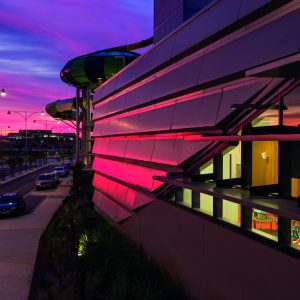
FlameGuard - Dockers, WA

This Environmental Product Declaration (EPD) provides a detailed account of the environmental footprint for Bondor’s range of Australian made insulated wall panels with non-combustible Mineral Wool core. This EPD is based on Life Cycle Assessment with ISO 14025 and EN 15804:2012+A2:2019 and provides a comprehensive scope of cradle to gate (with options). The declared unit is 1m2 of insulated panel.

INCUDED PRODUCTS IN THE EPD
Equitilt FlameGuard
LuxeWall FlameGuard

EPD Insulated Roof and Wall Panels with a Fire-Retardant EPS

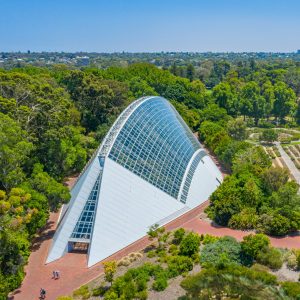
MELBOURNE, AUSTRALIA, DECEMBER 31, 2019: Bicentennial Conservatory at Botanic garden in Adelaide, Australia

This Environmental Product Declaration (EPD) provides a detailed account of the environmental footprint for Bondor’s range of Australian made insulated wall & roof panels with fire retardant EPS-FR core. This EPD is based on Life Cycle Assessment with ISO 14025 and EN 15804:2012+A2:2019 and provides a comprehensive scope of cradle to gate (with options). The declared unit is 1m2 of insulated panel.

INCUDED PRODUCTS IN THE EPD
BondorPanel
DesignerWall by Bondor®
LuxeWall by Bondor®
InsulWall®
Equitilt®
SolarSpan®
Solaris RidgePanel®
Equideck®
InsulRoof®
Solaris CorroPanel®
CoolRoof by Bondor®

EPD Insulated Roof and Wall Panels with PIR Core

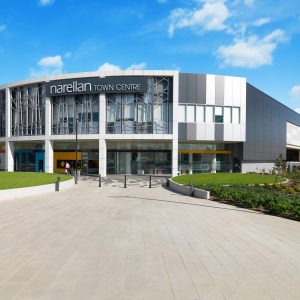
Inspire - Narellan, NSW

This Environmental Product Declaration (EPD) provides a detailed account of the environmental footprint for Metecno’s range of Australian made insulated wall & roof panels with fire resistant PIR core. This EPD is based on Life Cycle Assessment with ISO 14025 and EN 15804:2012+A2:2019 and provides a comprehensive scope of cradle to gate (with options). The declared unit is 1m2 of insulated panel.

INCUDED PRODUCTS IN THE EPD
MetecnoPanel®
MetecnoInspire
MetecnoSpan®
EconoClad

EPD Rigid Insulation Board with PIR Core

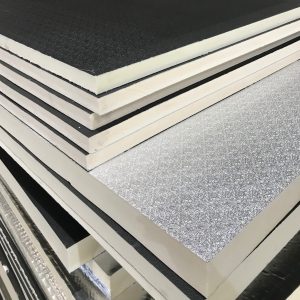
Rigid Panel (2)

This Environmental Product Declaration (EPD) provides a detailed account of the environmental footprint for Metecno’s range of Australian made rigid insulation board with fire resistant PIR core. This EPD is based on Life Cycle Assessment with ISO 14025 and EN 15804:2012+A2:2019 and provides a comprehensive scope of cradle to gate (with options). The declared unit is 1m2 of rigid insulation board.

INCUDED PRODUCTS IN THE EPD
MetecnoTherm®

Handling & Storage of Mineral Wool Insulated Panels

Storage of Mineral Wool Insulated Panels in Australia

Mineral Wool (MW) panels have different characteristics to other core type panels. One of these differences is in handling and storage of panels on site. Installation crews may be very experienced with traditional insulated panels however some of the practices used for handling these panels are UNACCEPTABLE when handling MW panels.

Watch this helpful video to learn the correct method for handling and installing MW panels.

Site Storage of panels

Upon delivery to site the packs of MW panels must be stored on a flat, level and stable surface, preferably concrete

Packs of MW panels must be stored to ensure the panels do not get wet. The factory wrapping may not be adequate to ensure the panels remain completely dry so additional protection should be used, preferably store the panels indoors.

When lifting packs of MW panels by forklift always lift at the marked lifting points.

Site Storage Panels in Australia

Separating the top panel from the stack

When separating the top MW panel from a pack of MW panels one end of the panel should be slid slightly to one side of the pack. This enables workers to lift the end of the MW panel by gripping under the bottom skin of the panel.

Never lift a MW panel by the top skin only.

Lifting equipment

Selection of the correct equipment to lift and install the MW panels is dependent upon several factors;

  • Length and thickness of the MW panels to be lifted,
  • Landing location of the MW panels above/below floor level,
  • Any rough terrain/sloping surface etc that the lifting equipment will need to travel on and,
  • General accessibility of the site.

This is not an exhaustive list and individual site requirements must be considered in equipment selection.

The correct vacuum lifter must have multiple suction heads. The use of vacuum lifters with a single suction head is not recommended.

Vacuum Lifter Equipment in Australia
Lifting Equiptment in Australia

Once the correct vacuum lifter has been sourced and correctly located onto the MW panel one end of the panel must be slid slightly to one side of the remaining MW panels in the pack. The panel to be lifted with the vacuum lifter must then be manually lifted enough to break the suction between the MW panels before the vacuum lifter takes the panel weight.

Correctly locating of vacuum lifter on the panel

Correctly locating the vacuum lifter on the MW panel will help avoid damage to the panel.

The suction heads of the vacuum lifter should be located 70% of the length of the panel from what will become the bottom of the panel when the panel is in the vertical position.

When a vacuum lifter with extension arms is used the 70% distance is measured from what will be the bottom of the panel to what will be the lowest suction heads when the panel is in the vertical position.

Carefully conduct a test lift to confirm the vacuum lifter is in the correct location.

Jerking or sudden lifting of the vacuum lifter is to be avoided as this raises the risk of the top skin separating from the core of the panel.

Potential consequences

The key to the successful use of MW panels is to ensure the panel core remains completely dry and securely glued to the steel skins.

Incorrect handling or storage of MW panels can result in delamination or creasing of the panel.

What is Solar Absorptance?

Cannonvale construction site in Queensland using eco-friendly materials

What is the right colour and what is allowable under the NCC?

Our buildings’ colour palette today is very different to that of 50 years ago. The Australia of the 1950’s & 60’s had lots of red brick walls and dark coloured roofs, reminiscent of the colours of a much colder climate.

These changes are part of a natural process of evolution of trends in our society, but to a larger degree reflect the adaptation of our architecture to better suit the Australian climate, as well as our greater awareness of the impact this will have on the health of our environment. Designs that take advantage of natural air flow for instance, and colours that help absorb or reflect the heat depending on the climate zone are some of the many factors influencing this change.

Since the late 1990’s there has been a shift away from dark colours, particularly for roofing. This has been championed by changes in the BlueScope Steel colour palette over this period and also changes to acceptable building practices under the NCC.

This process has continued with the latest changes introduced in NCC Volume One for commercial roofs and Volume Two for residential roofs and walls. Dark coloured roofs will no longer be permitted under the Deemed to Satisfy (DtS) provisions. Commercial buildings will need a light-coloured roof, with all climate zones (except for Climate Zone 8) requiring a maximum solar absorptance of 0.45 to comply. This means that any commercial roof assessed under the DtS provisions will need to be Surfmist®, Classic Cream®, Paperbark®, Shale Grey® or Evening Haze®. All medium or dark coloured roofs, including “green” roofs, dark concrete and membrane roofs require a performance-based solution to demonstrate compliance.  For residential buildings in climate zones 1 to 4, the solar absorptance of the upper surface of a roof must not be more than 0.64, the solar absorptance of the outer surface of a wall must not be more than 0.7.

Deemed to Satisfy Performance Solution
Bondor Metecno Insulated Penels: acceptable external roof skin colours based on BlueScope's guidelines on max skin temperature
  Exposure Category
1 2 3 4
EPS-FR core
(< 80°C)
Classic Cream® Classic Cream® Classic Cream® Classic Cream®
Surfmist® Surfmist® Surfmist® Surfmist®
Paperbark® Paperbark® Paperbark® Paperbark®
Shale Grey® Shale Grey® Shale Grey® Shale Grey®
Dune® Dune® Dune® Dune®
Pale Eucalypt®^ Pale Eucalypt® Pale Eucalypt® Pale Eucalypt®
Manor Red®^ Manor Red®^ Manor Red® Manor Red®
Basalt®^ Basalt®^ Basalt® Basalt®
Woodland Grey®^ Woodland Grey®^ Woodland Grey®^ Woodland Grey®
         
  Exposure Category
1 2 3 4
PIR core
(< 100°C)
Classic Cream® Classic Cream® Classic Cream® Classic Cream®
Surfmist® Surfmist® Surfmist® Surfmist®
Paperbark® Paperbark® Paperbark® Paperbark®
Shale Grey® Shale Grey® Shale Grey® Shale Grey®
Dune® Dune® Dune® Dune®
Pale Eucalypt® Pale Eucalypt® Pale Eucalypt® Pale Eucalypt®
Manor Red® Manor Red® Manor Red® Manor Red®
Basalt® Basalt® Basalt® Basalt®
Woodland Grey® Woodland Grey® Woodland Grey® Woodland Grey®
^ Limited warranties apply - contact Bondor Metecno for more information

So, what is Solar Absorptance?

Solar Absorptance (SA) is the fraction of the total incident solar radiation that is absorbed by the roofing material, with the remainder being reflected. SA is expressed as a ratio between 0 and 1. A roof with a lower SA will absorb less heat, compared to a roof with a higher SA, which will help in keeping the roof space and the building cooler.

For detailed information on NCC Volumes One and Two please refer to the ABCB website. Volume One of NCC primarily regulates multi-residential, commercial, industrial and public assembly buildings and some associated structures. NCC Volume One requires the Solar Absorptance of the upper surface of the roof to be less than or equal to 0.45 for the DtS pathway. Roof surfaces with SA greater than 0.45 must use the Performance Solution pathway to compliance.

What does this mean for insulated panel colours?

Bondor Metecno are guided by the NCC and the BlueScope’s recommendations for appropriate colours, with the addition of special requirements specific to insulated panel. Bondor Metecno panels acceptable external colours based on COLORBOND’s guidelines of maximum skin temperature can be seen below

Bondor Metecno panel's acceptable external roof skin Solar absorptance values based on BlueScope's guidelines on max skin temperatures
Application                                                         Roof - max solar absorptance value
Panel Type                                                                  Exposure Category
1 2 3 4
EPS-FR
(< 80°C)
0.54 0.62 0.69 0.75
Mineral Wool
and PIR
(< 100°C)
0.75 0.96 0.96 0.96
Exposure category 1
Exposure category 3
Wilcannia, Oodnadatta, Swan Hill, Mardie
Toowoomba, Mackay, Cooma, Port Stephens, Omeo, Gladstone, Bowral, Lithgow, Bright
Exposure category 2
Exposure category 4
Melbourne, Sydney, Brisbane, Townsville, Adelaide, Perth, Cairns
Hobart, Launceston, Devonport

Are You Ready For NCC2022?

In Australia, the residential sector is a big consumer of energy – in fact 57 percent of emissions from the building sector come from housing and apartments and 40 percent of that is related to heating and cooling.

But the changes to the National Construction Code (NCC) 2022 aim to go beyond reducing the environmental impacts. In recent times much of Australia has experienced extreme weather conditions and the ability of our homes to provide comfortable living conditions, without fully relying on air-conditioning, has gained more attention – focusing on improved occupant comfort, reduced energy wastage and improved resilience to extreme weather.

Register here to receive a copy of Are You Ready NCC2022?

World-First: Secure End Lap Insulated Roof Solution

SecureLap roofing panel in a Queensland construction site

Australia is leading the world with Bondor’s new innovation in end lap protection with SecureLap by Bondor providing building occupants and roofing contractors with the assurance that their PIR insulated roof is sealed effectively from the harsh Australian conditions and high rainfall especially with ‘low pitch’ long spanning roof runs.

Current sheet-to-sheet end-laps that are acceptable in other parts of the world have caused frustration and complications throughout Australia’s commercial roofing industry. These complications see leaking roof laps in several shopping complexes around Australia and are often very difficult to rectify. Confusion also exists around material warranties, who covers what and for how long.

SecureLap® is the answer to the “low cost focus”, driven by today’s market realities where a simplistic approach to connecting long panel roof runs over one purlin (rather than two with expansion steps), are required. Bondor developed SecureLap® as a unique lapping solution for local conditions. This was achieved through industry wide feedback and consultation, extensive in-house product development and rigorous weather testing to Australian Standards (conducted by CSIRO).

For more information on how SecureLap® can provide watertight security and warranty confidence to your next project, download the brochure or contact your nearest Bondor Australia office.

Equitilt FlameGuard® Non-Combustible Wall on world-class football facility

FlameGuard Dockers architectural insulated panel wall in Queensland

Bondor’s Equitilt® FlameGuard® non-combustible walling was recently used extensively on the $109 million Aquatic Recreation Centre and Dockers training facility located in Cockburn, WA. Equitilt® FlameGuard® architectural panels were fabricated using a premium metallic Colorbond® finish and functioned as a non-combustible (AS1530.1) wall cladding combined with high thermal performance achieved through Bondor’s innovative mineral wool cored wall panel. Equitilt® wall cladding created an exceptional architectural feature around all the function areas, offices and six basketball courts and aquatic facilities.