


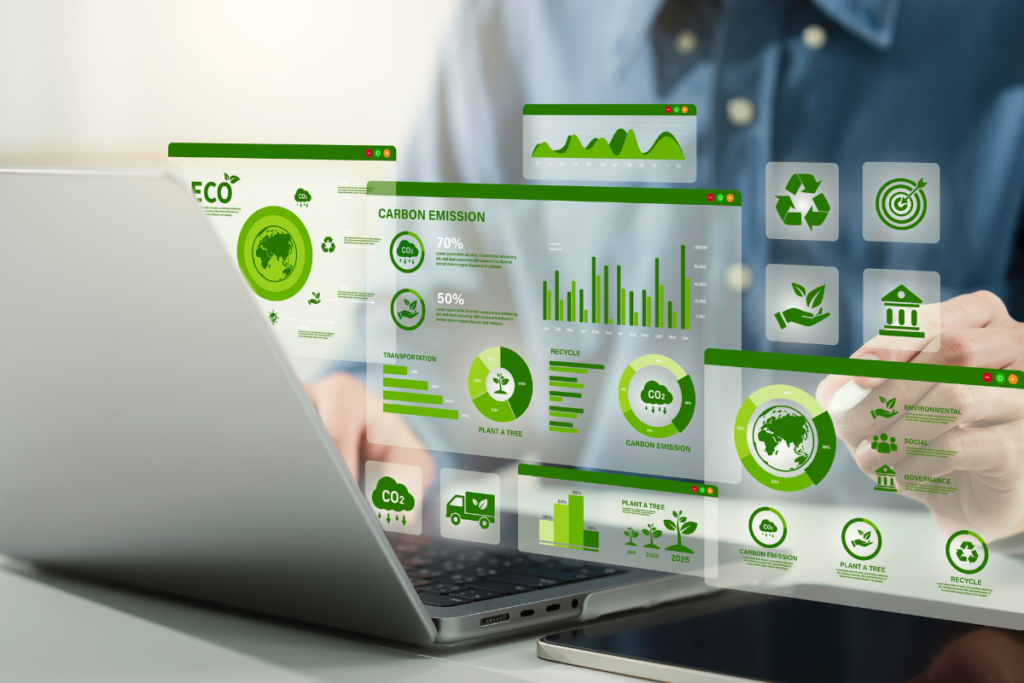
Carbon reporting is no longer only an end-of-project or end of year exercise. It is increasingly shaping decisions from the earliest stages of design, influencing how materials are selected, how buildings are constructed, and how they perform over time.
This shift is being driven largely by the growing focus on Scope 3 emissions, which are the emissions that sit outside a company’s direct operations but are embedded across the supply chain.
In a recent Engineers Australia webinar, Rohan Madathanapalli, Business Development Manager and Technical Consultant for Bondor Metecno Group, outlined what this means in practical terms for engineers, designers and builders.
The message is clear: mandatory carbon reporting for eligible businesses may create the need to measure emissions, but the real opportunity to reduce them sits in design and product decisions.
Why Scope 3 brings the supply chain into focus
Carbon reporting is typically broken into three categories:
- Scope 1: Direct emissions from owned or controlled operations (e.g. what comes out the chimney)
- Scope 2: Indirect emissions from purchased energy (e.g.type of power that runs the facility)
- Scope 3: Other Indirect GHG emissions across the wider up and downstream value chain, including capital goods, transportation and distribution
For construction, Scope 3 is where the biggest shift is happening. It reflects emissions associated with manufacturing and distribution facilities along with transport, installation, maintenance and end-of-life outcomes – and where the selection of complimentary construction materials that reduce energy consumption of buildings has never been more critical.
This fundamentally changes the role of products. Materials are no longer just inputs to be procured and installed; they become part of the project’s carbon footprint and, in many cases, part of the client’s mandatory reporting obligations.
From reporting exercise to design decision
Traditionally, carbon reporting has been treated as something captured after a project is complete, if at all. However, that approach is shifting as reporting requirements become mandatory.
Carbon is now another project metric alongside cost, compliance and performance. It does not replace these considerations, but it influences how they are balanced.
This matters because many emissions are effectively locked in early. Decisions around material selection, system specification and how efficiently a building is designed and will function all shape the carbon outcome before construction begins.
Where product decisions make a difference
From a carbon reporting perspective, products influence outcomes across the lifecycle of a building, from manufacturing through to long-term operation.
There are three key areas where this impact is most visible:
- Embodied carbon — emissions linked to raw materials, manufacturing and delivery to site
- Construction efficiency — how systems reduce material use, site activity and waste
- Operational performance — how building systems affect energy demand over time
Together, these show why product selection is no longer just a technical, commercial or productivity decision. It is also a carbon decision.
Embodied carbon and the role of product data
Embodied carbon refers to the emissions associated with materials and products before they are installed, including raw materials, manufacturing and, depending on the assessment boundary, transport to site
In the past, these impacts were often estimated using generic data. While this still has a place in early design, it becomes less useful as projects move towards procurement and reporting.
Product-specific data is increasingly important. Environmental Product Declarations (EPDs) provide verified lifecycle information, giving engineers and specifiers a clearer basis for comparison and decision-making.
This reflects a broader shift. Manufacturers are not just supplying products — they are expected to provide credible and independently verified data that project teams can use to understand and report carbon outcomes with confidence.
Construction efficiency as a practical lever
Carbon outcomes are influenced not only by what is specified, but also by how it is built.
Prefabricated systems such as insulated panels combine multiple elements — external skin, insulation and internal lining — into a single product. This simplifies the build process compared to traditional multi-layer systems.
In practice, this approach can deliver several efficiencies:
- Fewer on-site construction activities
- Faster enclosure of the building
- Reduced material waste when panels are cut to project-specific dimensions
In some cases, lighter systems may also reduce structural demand and the amount of steel support required, depending on the overall design.
These benefits are not universal, and no single system will be the best solution in every scenario. However, they highlight an important point: reducing carbon is often about improving efficiency, using less material, reducing waste and simplifying construction.
Operational performance and long-term impact
The role of product selection does not end once construction is complete. The building envelope continues to influence energy use every day of the building’s life.
This is particularly important in buildings that rely heavily on temperature control, such as cold storage, logistics facilities and supermarkets.
Performance is driven by a combination of factors:
- Thermal resistance, which reduces heat transfer
- Air tightness, which limits energy loss
- Detailing and installation, which determine how the system performs in practice
If these elements are not considered together, even well-designed systems may not deliver expected outcomes. When they are aligned, they can help reduce operational energy demand over time.
Looking beyond new builds
While the carbon conversation often focuses on new construction, existing buildings represent a significant opportunity.
Many older assets, including warehouses, distribution centres and industrial sites, were built to earlier standards and may no longer perform efficiently.
In these cases, upgrading the building envelope via retrofit can offer a practical alternative to demolition and rebuild.
This can:
- Improve thermal performance and reduce energy demand
- Extend the life of the asset
- Avoid emissions associated with demolition and new materials
Retrofit also offers commercial advantages, as upgrades can often be staged to eliminate or greatly minimise operational disruption.
A more integrated approach to decision-making
As carbon reporting evolves, it is driving a more integrated approach to how projects are delivered.
This includes:
- Using independently verified product data rather than generic assumptions
- Considering embodied and operational carbon together
- Evaluating construction efficiency as part of design decisions
- Engaging manufacturers earlier in the process for technical support and data
This shift reflects a broader change in the industry, where carbon is becoming a shared responsibility across the design, construction and supply chain.
What this means for project teams
Carbon reporting may start with measurement, but carbon reduction starts much earlier — with design decisions.
As Scope 3 brings greater visibility to materials, construction methods and lifecycle performance, project teams are under increasing pressure to understand not just what they build, but how those decisions impact emissions across the entire value chain.
This requires a more deliberate approach to specification — one that is informed by credible product data, considers both embodied and operational performance, and recognises the role of construction efficiency in reducing waste and material use.
It also reinforces the importance of early collaboration. Engaging manufacturers, engineers and suppliers at the design stage allows project teams to make more informed decisions before emissions are effectively locked in.
The opportunity is not just to report carbon more accurately, but to actively reduce it through better design, better data and more efficient construction.
Talk to Bondor Metecno’s technical team about carbon reporting
As carbon reporting requirements continue to evolve, having access to accurate product data and practical design guidance is becoming increasingly important.
Bondor Metecno’s technical team can support project teams with Environmental Product Declarations, specification advice around Green Tag certified products, and guidance on how insulated panel systems contribute to both embodied and operational performance.
To discuss how carbon reporting considerations can be addressed in your next project, contact our team.