


Commercial projects are under more pressure than ever. Clients want buildings delivered faster and with greater cost certainty, while project teams juggle labour shortages, weather risk and increasingly complex compliance demands. Against that backdrop, modular and prefabricated construction are becoming compelling ways to deliver commercial outcomes more efficiently.
Although “modular” and “prefab” are often treated as different ideas, in practice they sit on the same spectrum: shifting work away from traditional on-site construction towards pre‑planned, pre‑made solutions that are easier, faster and more predictable to assemble.
We spoke with Darryl Stephenson, Business Development Manager with the Bondor Metecno Group about how modular and prefabricated construction are being used in commercial projects, the practical benefits and learning curve of insulated panel systems, how they compare with alternatives, and what it takes to get compliance and design right.
What modular construction means in practice
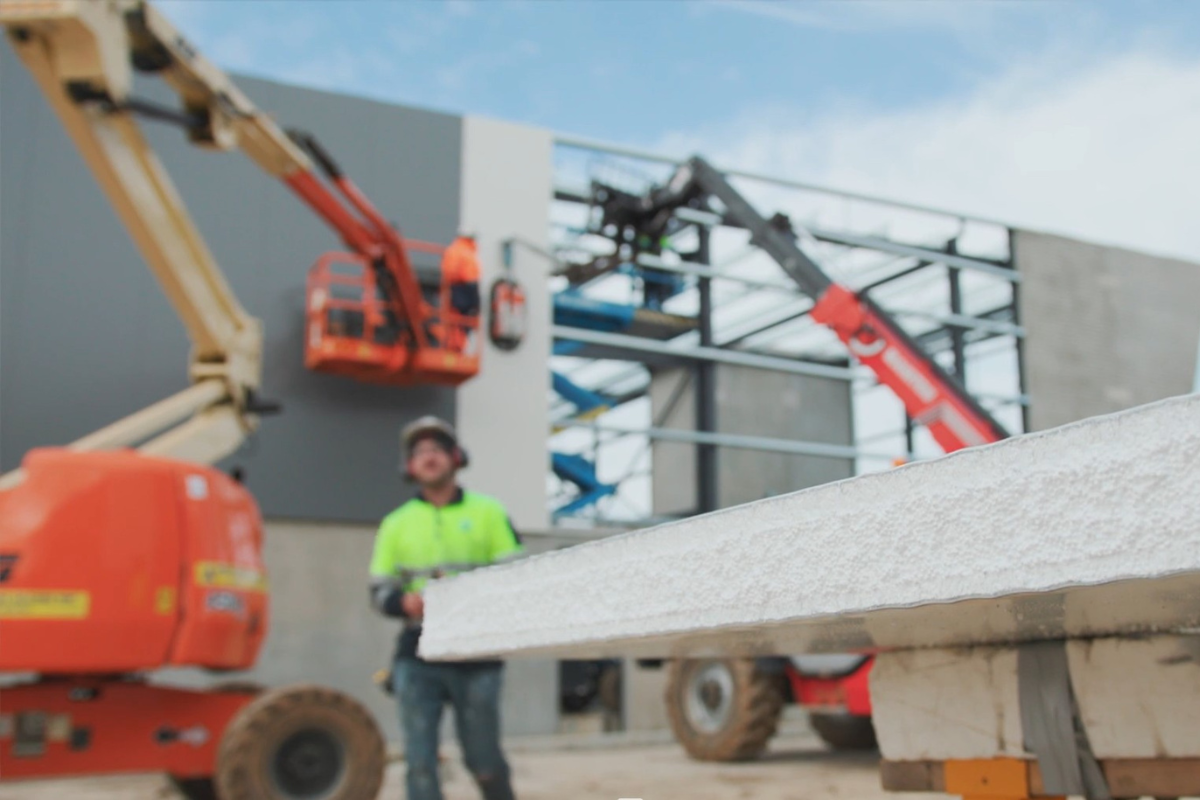
Traditional commercial buildings are typically delivered using a ‘stick‑built approach’. Large quantities of raw steel, framing and cladding arrive on site, where they are cut, fabricated and assembled in the open. Every adjustment happens in real time, on scaffolds and lifts, exposed to the weather.
Modular or prefabricated construction approaches that same task differently. Wherever possible, materials are ordered in prefabricated form or delivered already cut to the correct sizes and lengths. The aim is to reduce on‑site cutting and fabrication, minimise waste and lower the cost of rubbish removal, while also speeding up and simplifying installation.
In some projects that simply means custom‑made roofing and wall cladding, supplied to precise lengths so installers can fix it straight to the frame with minimal modification. In others it involves complete three‑dimensional modules built off site, transported to the project and craned into position to form offices, amenities or accommodation.
In all cases, more of the work is done early and away from the weather, so the site phase is shorter, cleaner and more controlled.
Where modular fits in commercial projects
Modular and prefabricated methods are now used across a wide range of commercial and industrial buildings. They are being applied to office developments, distribution centres, municipal swimming pools and school facilities such as gymnasiums, administration buildings and classrooms.
In remote locations, particularly for mining and resources, modular builders are delivering entire building suites off site: administration blocks, amenities facilities and dormitory accommodation all arrive as completed units that can be installed with minimal local construction.
In metropolitan areas, modular approaches are increasingly used in education and community infrastructure, supported by manufacturers and distributors with operations in multiple states. From that perspective, modular can mean fully off‑site volumetric units or simply custom‑made, panelised materials that arrive on site ready to be installed. The common goal is to reduce waste and construction risk while improving the energy efficiency and performance of the finished building.
How modular competes with traditional methods
Many commercial projects do not begin with a formal commitment to “go modular”. Instead, they go out to tender, often on a design‑and‑construct basis. Modular and prefab specialists bid alongside traditional builders. Because their methods are inherently efficient in many situations, they compete strongly on efficiency, cost and risk, and increasingly win work on those merits.
From the client’s perspective, the brief may not have changed at all. What changes is the way the project is delivered: more work happens off site, more thinking is done early, and the on‑site phase becomes faster and more predictable.
Key benefits: time, weather and waste
Moving more of the build off site produces benefits that are highly relevant to commercial portfolios.
First, there is reduced weather risk. Work done in a factory, a workshop or under cover is much less exposed to rain and wind than work carried out entirely on open slabs. This reduces weather delays and helps keep construction moving, even when on‑site tasks might otherwise have to stop.
Second, material control improves. When products are prepared and stored in controlled environments, they are available in the right quantities at the right time, rather than sitting fully exposed on site while crews wait for other project stages to catch up.
Third, there is less waste and a reduction in disposal costs. If wall and roof elements are cut to length or fully prefabricated, there are fewer offcuts and less packaging left over. That immediately reduces the volume of material that needs to be removed, sorted and paid for as rubbish.
Finally, installation on site becomes faster and cleaner. Because more work has been done before materials arrive, crews spend less time measuring and adjusting and more time installing. This is especially true when panel systems are designed to integrate easily with the supporting structure, so that building envelopes can be closed in quickly and consistently.
Taken together, these advantages translate into shorter build times, less disruption for neighbours and tenants and fewer surprises midway through construction
Design Considerations and the Learning Curve
Insulated panel systems are long spanning and offer significant design flexibility. Building designers can push spans and simplify structure, provided the engineering supports it. In many cases the question is not whether something can be done with panels, but how the team chooses to use them.
There can be, however, a real learning curve for teams new to modular and panelised construction. Often builders expect to capture all the time and efficiency benefits on their first panel project. In practice, that first job is where they are still learning how to sequence installation, how best to handle and store panels and how to coordinate other trades around a panelised build.
It is common for builders to finish that initial project and immediately identify improvements for the next one. The strongest gains in speed and ease of construction tend to appear from the second or third build onwards, once methods and sequencing have been refined.
Getting Compliance Right
Any serious discussion of modular and panelised construction must address compliance, especially around fire performance. Not all products on the market behave the same way in a fire, and they are not interchangeable.
Bondor Metecno insulated panels use three insulation core types: EPS‑FR, PIR and Mineral Wool. All three are CodeMark certified under the CodeMark Certification Scheme and deemed to comply with the requirements of the National Construction Code, and each has its appropriate applications.
When the right panel is selected for a given use, these systems can meet a wide range of requirements, including building on boundaries, dealing with bushfire zones and achieving specified fire resistance levels and burn times. Thermal and acoustic targets can also be addressed within the same envelope.
The key is alignment between product choice, application and the relevant building codes. When these are aligned, panelised construction can satisfy compliance standards while delivering the additional benefits of speed, consistency and integrated performance.
Wallan Home & Trade industrial estate
A recent ‘big box’ retail development in Wallan illustrates how panel systems and modular thinking operate in practice. The project team engaged early to review options, and once the structural steel and framing were complete, detailed check‑measures and drawing reviews were carried out.
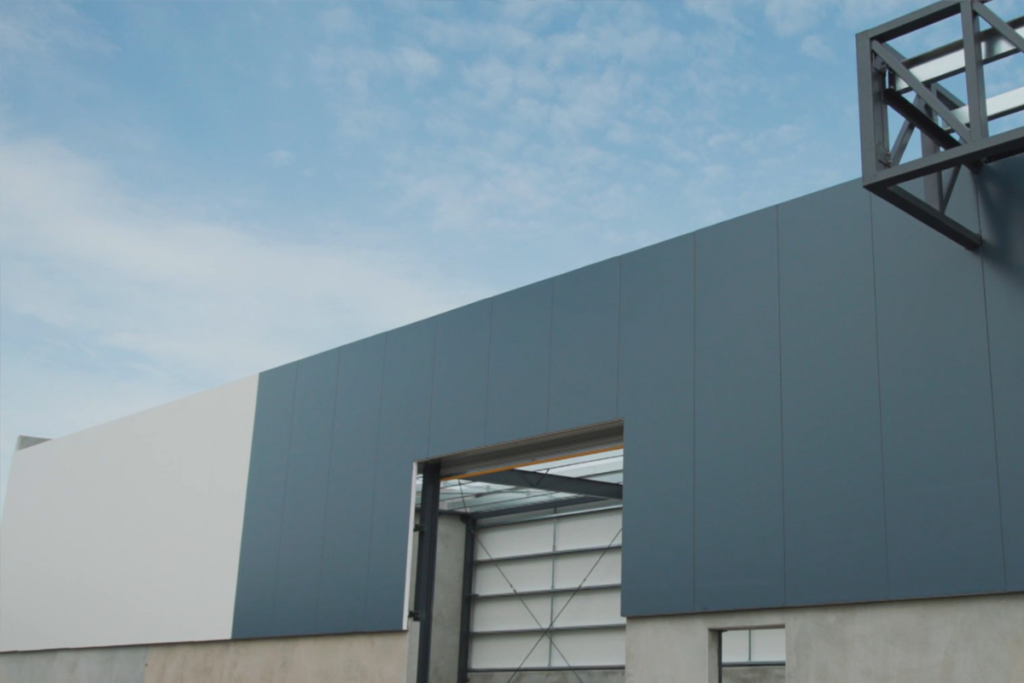
Through that process, the team decided to wrap the panels around a concrete lower wall so that the panel envelope followed the geometry of the base structure. They also focused on carrying panel colours cleanly through corners and transitions so that joints aligned and the colour read consistently around the building.
Because of this preparation, installation on site proceeded quickly and smoothly. The installer was able to move methodically along the building, fixing panels with minimal adjustment and rework. The result was a high‑quality, efficient build sequence for a large, big‑box retail development.
The selected panel, LuxeWall by Bondor® architectural walling system, is more commonly associated with high-end residential developments. It was chosen for the Wallan project because the client wanted a premium appearance both inside and out, and preferred a concealed‑fix system without visible external screws.
The team achieved the finish and performance the client wanted and set a template for future stages of development, which are expected to use the same approach.
Comparing panel systems with other commercial options
In commercial and industrial projects, insulated panels most often compete with tilt‑up concrete, single‑skin steel cladding and aluminium composite panels. Each of these systems has its place, but they behave quite differently.
Tilt‑up concrete is robust and difficult to damage, which makes it attractive for many industrial uses. However, it creates interiors that are cold in winter and hot in summer, especially where the concrete face is left exposed. Its weight demands heavier footings and thicker slabs, and cranage requirements can be significant.
Single‑skin steel remains a choice where lowest upfront cost is the overriding factor, but it offers limited security and does little to address insulation or condensation.
Aluminium composite panels have been popular because they install quickly and provide attractive finishes, especially on higher façades. Yet they contribute little to thermal performance and do not manage condensation. Some ACP products have also been implicated in fire incidents, which has affected how they are perceived and used in the market.
Insulated panel systems take a different path. Because they are lighter than thick concrete walls, they can allow for more economical footings and slabs. At the same time, they provide integrated insulation and an internal lining, creating interiors that are more comfortable and more visually appealing from day one.
Designers and architects who adopt insulated panel solutions for their first few projects often see the benefits clearly: projects delivered under budget, smoother installation and buildings that still look and perform well five or ten years later.
That experience drives repeat use and gradually shifts modular or panelised construction from a niche option to a standard part of their toolkit
Shifting how commercial buildings get built
Traditional systems such as tilt‑up concrete and steel framing will continue to play major roles in commercial construction. No single method will replace them entirely.
But modular thinking and panelised construction are clearly gaining ground as more teams experience the combination of speed of installation, reduced waste, and improved comfort and appearance.
For clients and project teams, the opportunity is to consider modular and prefabricated options early in the design process, and to work with manufacturers who understand how to balance performance, compliance and constructability from the outset. That is where modular commercial construction moves from an interesting alternative to a reliable way of delivering better buildings, more predictably.
Talk to Bondor Metecno’s technical team for modular advice
To explore how modular and panelised construction could work on your next project, contact our technical team today. We’ll help you identify where panels make sense, how they compare with your current approach, and what you need to get started.